

By Nicholas King, Global Head of Ocean, Edge Worldwide Logistics
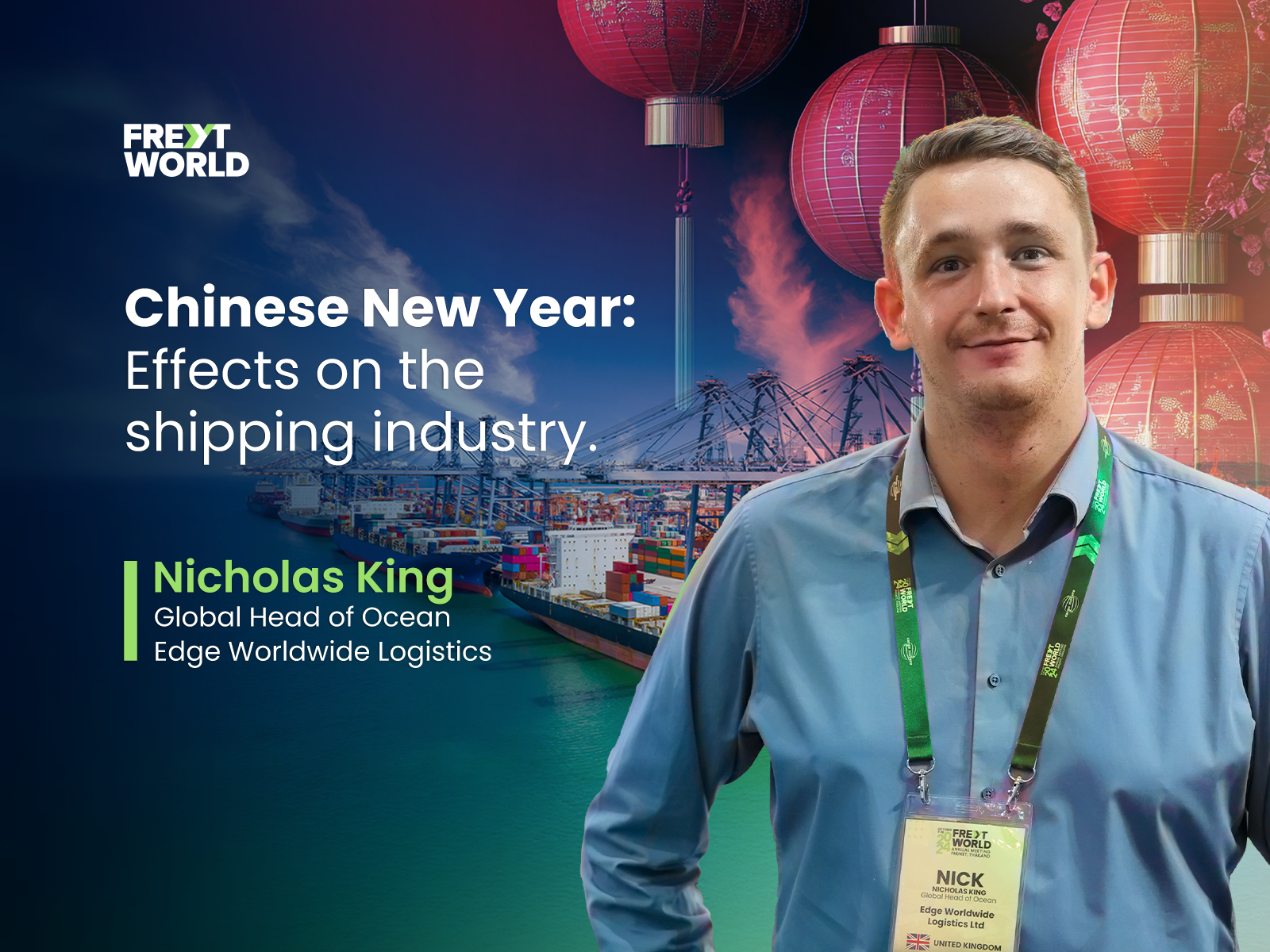
As we move into late January, one of the most turbulent shipping periods comes to a close. Below, I outline my opinion on these complexities, what drives them, and how we can manage them.
Chinese New Year (CNY), also known as Lunar New Year, is a festival celebrated across East and Southeast Asian cultures, marking the beginning of spring and traditionally a time to honor ancestors and gather with family. The date of CNY is determined by the lunar calendar, falling on the second new moon after the winter solstice, and so changes every year.
This festive period poses significant challenges for the shipping industry and to keep supply chains running smoothly, whether you are the shipper, importer or facilitating as a freight forwarder, it is crucial to understand these challenges and plan effectively.
The market issues do not begin and end with the holiday itself but often start weeks before CNY with ripple effects felt several weeks after.
Industry Challenges
Capacity Issues: In the weeks leading up to CNY, demand increases substantially as manufacturers and importers alike rush to ship their goods before the shutdown. Vessels are overbooked much earlier than usual, and space is a premium.
Freight costs: The intersection of increased demand, tight capacity, and equipment shortages drives up freight costs significantly during this period.
Outports/Inland depots: Outports face equipment shortages as container stock is prioritized at primary terminals during peak periods. This pressures trucking to transport inland goods on longer routes to meet mother vessels instead of nearby feeders.
Workforce: Workforce reduction near CNY affects operations as staff take time off to travel home and celebrate with families. Trucking, port operations, freight forwarding and warehousing etc are all managing a higher demand while understaffed.
Factories: Almost all manufacturing facilities shutdown for two weeks, and sometimes longer and on return can take time to ramp up production and clear backlogs. This ripple effect on supply chains can extend long into Q1, which creates a well-known slack in the ocean market. To avoid market saturation and manage the slack period, carriers will schedule many void/blank sailings.
Preparation Strategy
Despite these known yearly obstacles, many retailers and freight managers remain under-equipped and reactive in this market. Taking steps months prior will help mitigate the challenges.
Forecasting: It’s important to understand and manage expectations. Collaborating with all stakeholders to forecast volumes well in advance of CNY helps ensure space is secured.
Book Early: Reserve vessel space as early as possible. Outline all pre-CNY orders and timelines to finalize shipping schedules well in advance.
Leverage Technology: System capabilities have advanced lightyears beyond any manual Microsoft Excel solution you have been too afraid to change. Whether developed in-house or provided by your vendor, utilise supply chain management software. Monitor shipments in real time and provide yourselves and your vendors/clients with the visibility to allow for optimal management.
Communication: Transparency amongst key stakeholders is paramount throughout the year; however, this is exacerbated over CNY. Regardless of stringent preparation, unforeseen challenges are inevitable: space cancellation, equipment, trucking availability, vessel omissions are but a few examples. Proactively updating all parties on delays, cost increases, and contingencies will help keep this period stress-free.
Expand Supply Chains: Many importers reliant on Asia have diversified product sourcing to reduce CNY impact and overall dependence. Explore alternative suppliers outside Asia. Utilize regional warehousing to stockpile inventory in areas accessible during the shutdown.
CNY for the shipping industry, while predictable, creates unavoidable disruption. Careful planning to proactively address the challenges can minimize the impact on operations and businesses. Diligence and nimbleness are key to navigating complexities and ensuring smooth supply chain operations.

Freyt World Blog Contributor
Freyt World is a global logistics network uniting members from around the world. Our mission is to revolutionize global logistics through collaboration and innovation. Our platform goes beyond networking, enabling members to excel and grow together, featuring articles by logistics professionals for their peers. This series will cover industry-relevant issues and news, providing valuable insights for professionals in the field.
Read more Freyt World Blogs ⇲
- The Next Margin Comes from the Desk5U AI CEO Yagiz Abik explains why the freight forwarding desk is becoming the next source of margin as AI speeds up quoting, lowers cost to serve and turns internal knowledge into business value.
- Mauro and SQL Take on a 16-Case OOG Shipment to Benghazi
 Mauro International Services and SQL Shipping worked together on a 16-case shipment to Benghazi, including five OOG units requiring flat racks, exceptional road permits, technical escorts, night port access and certified lashing.
 - The Timing Challenge Behind VDM and Airways’ Breakbulk Shipment to Brazil
 VDM and Airways managed a breakbulk kiln shipment from Durban to Santos, keeping the cargo ready while a shifting vessel ETA made port timing and storage costs the biggest challenge.