

By Katerina Nickou, Global Network Key Account Manager at TEU Group Shipping & Forwarding
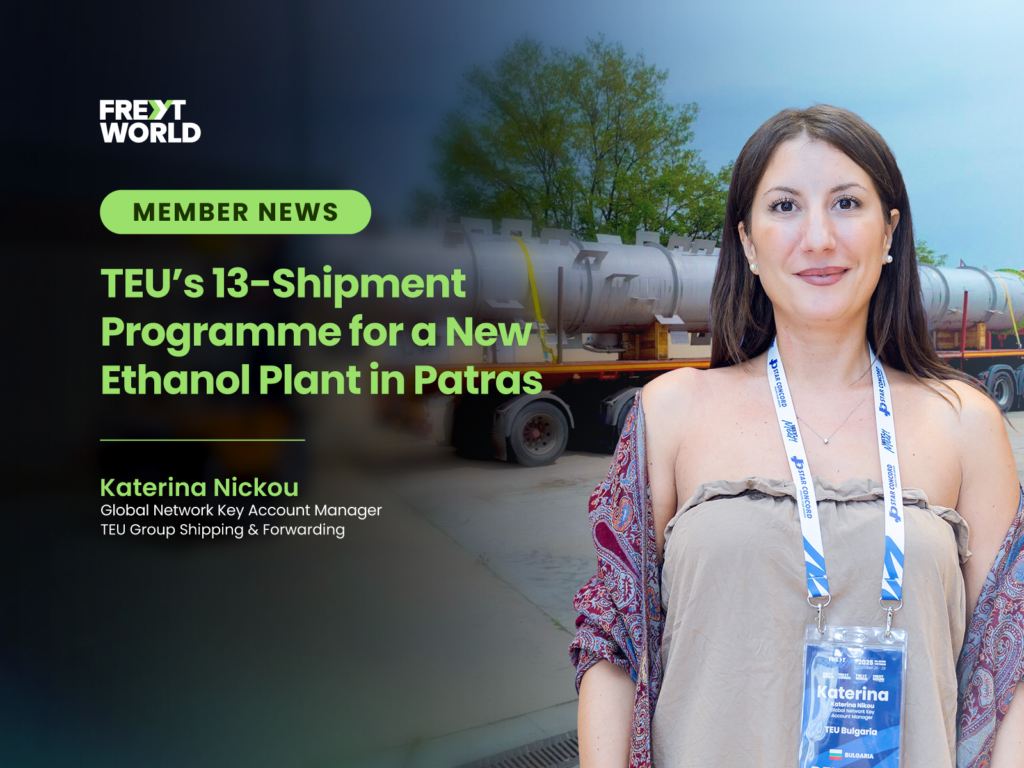
When a construction project depends on equipment arriving in sequence, the transport plan has to follow the build schedule closely.
That was the case for TEU Shipping & Forwarding Group during a recent series of deliveries for a new ethanol production plant in Patras, Greece.
From one equipment supplier in Cuneo, Italy, TEU handled 13 separate shipments, including 10 movements that required special transport arrangements. The route combined road transport from Cuneo to Venice, a ferry crossing from Venice to Patras, and final delivery in the Patras area.
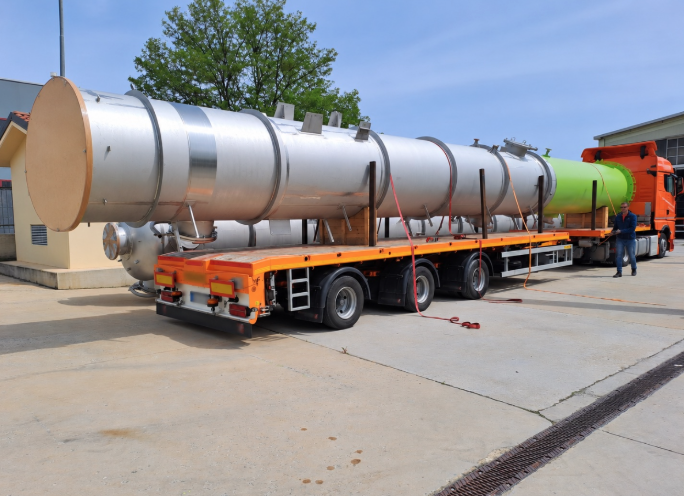
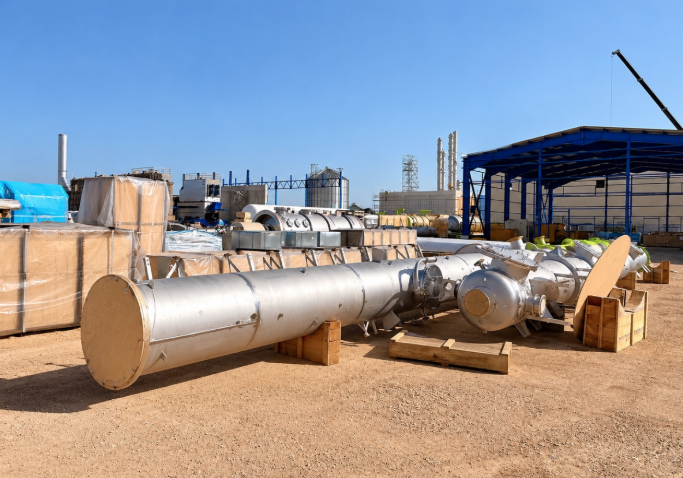
The cargo itself included long industrial equipment, with representative pieces reaching up to 19 metres in length.
The real work was keeping those 13 movements aligned with the construction schedule and making sure each load reached Greece when it was needed.
From Cuneo to Patras
The route followed the same general pattern for each shipment.
Cargo was collected from the supplier in Cuneo and moved by road to Venice. From there, the trailers crossed to Greece by ferry before continuing to the project site.
Some cargo dimensions and weights included:
|
Loading Date |
Cargo Dimensions |
Cargo Weight |
|---|---|---|
|
19 May 2026 |
16.85 × 1.90 × 2.40 m |
14,200 kg |
|
20 May 2026 |
19.00 × 1.40 × 1.40 m |
5,500 kg |
|
20 May 2026, second loading |
14.15 × 1.70 × 1.50 m |
4,000 kg |
|
21 May 2026 |
17.65 × 2.25 × 2.40 m |
8,800 kg |
These figures refer to the cargo itself rather than the overall loaded vehicle.
The length of the equipment was the main reason special transport planning was required.
Keeping the Delivery Sequence Aligned
The timing mattered because the equipment was needed for the plant’s construction.
TEU had a short lead time to organise the shipments, which meant the team had to bring together permits, equipment, routing and ferry bookings quickly enough to meet the required loading and delivery schedule.
Flatbed trailers were used for the long industrial equipment, while the required special transport permits were arranged for the road movements.
With several loads moving over a relatively short period, the team also had to keep the departures in the right sequence so the project site continued receiving equipment as planned.
Ferry Capacity Added Another Planning Layer
The Venice to Patras ferry leg also needed careful attention.
The movements took place as Greece’s tourist season was beginning, which increased competition for vehicle deck space from passenger cars and camper vans.
For overlength trailer combinations, suitable ferry space had to be secured in advance and matched with the planned delivery sequence.
TEU worked closely with transport partners and ferry operators to make sure the selected sailings fitted the construction schedule.
The ferry crossing was therefore planned alongside the road legs from the beginning, with each booking tied to the timing of the individual load.
Special Transport Planning from Italy to Greece
Each special transport required the right combination of trailer selection, permits and route planning.
The long industrial equipment was moved on flatbed trailers, with the transport plan coordinated alongside specialist partners.
That planning was especially important because the cargo had to move across both road and ferry stages before reaching the site in Greece.
The team had to make sure the transport arrangement worked not only on the Italian road leg, but through the ferry connection and final delivery in the Patras area as well.
With 10 special transports forming part of the 13 shipments, keeping those stages consistent helped the deliveries continue without disrupting the wider construction schedule.
Supporting the Ethanol Plant Construction
This project from Cuneo was completed within the required timeframe, keeping deliveries aligned with the construction schedule in Patras.
TEU managed the road transport, special transport requirements, permits and ferry arrangements needed to move the long industrial equipment from Italy into Greece.
Because several loads were moving in sequence, the full route had to work as one connected plan. From collection in Cuneo to the ferry crossing and final delivery in Patras, each stage had to be ready for the next.
Completing the project on schedule showed TEU’s strength in handling complex industrial movements into Greece.
The combination of specialist transport planning, permit coordination, ferry arrangements and final delivery showed the level of control and reliability TEU brings to demanding project cargo, and why the team continues to be a trusted partner for industrial shipments with tight delivery requirements.

Freyt World Blog Contributor
Katerina Nickou
Freyt World is a global logistics network uniting members from around the world. Our mission is to revolutionize global logistics through collaboration and innovation. Our platform goes beyond networking, enabling members to excel and grow together, featuring articles by logistics professionals for their peers. This series will cover industry-relevant issues and news, providing valuable insights for professionals in the field.
Read more Freyt World Blogs ⇲
- TEU’s 13-Shipment Programme for a New Ethanol Plant in PatrasTEU completed 13 shipments from Cuneo to Patras for a new ethanol plant, including 10 special transports, permits, flatbed trailers and ferry bookings timed around the construction schedule in Greece.
- The Next Margin Comes from the Desk5U AI CEO Yagiz Abik explains why the freight forwarding desk is becoming the next source of margin as AI speeds up quoting, lowers cost to serve and turns internal knowledge into business value.
- Mauro and SQL Take on a 16-Case OOG Shipment to Benghazi
 Mauro International Services and SQL Shipping worked together on a 16-case shipment to Benghazi, including five OOG units requiring flat racks, exceptional road permits, technical escorts, night port access and certified lashing.