
By Minnie Byun, Branch Manager of DS && WAC Vina Co. Ltd.

The Great Supply Chain Recalibration
In boardrooms across the globe, a strategic conversation is dominating supply chain planning: diversification. For years, the world relied heavily on China as its primary manufacturing hub. But a confluence of rising operational costs, geopolitical shifts, and the hard-learned lessons from pandemic-era disruptions has accelerated the "China+1" strategy. This isn't about replacing China, but about building resilience, agility, and new avenues for growth. At the heart of this global recalibration lies Vietnam. With its strategic location, burgeoning economy, and forward-thinking trade policies, Vietnam is rapidly transforming from a regional player into a bona fide global logistics powerhouse. The opportunities are immense, but so is the complexity. Navigating this vibrant market requires more than just a map; it requires deep, on-the-ground expertise.
That’s why we sat down with our Freyt World member in Hanoi, Minnie, a logistics veteran and key leader at DS & WAC VINA Co. Ltd. Her firsthand experience provides an invaluable guide for any business looking to tap into Vietnam's incredible potential. "We are not just witnessing change here in Vietnam; we are at the center of it," Minnie explains. "Every day, we help businesses from around the world establish and optimize their supply chains, turning the country's potential into their competitive advantage."
This article will serve as your expert guide, leveraging Minnie's insights to explore the key drivers behind Vietnam's rise, the critical infrastructure developments paving the way, and the practical strategies for navigating this exciting logistics landscape.
The "Why": Vietnam's Magnetic Pull for Global Business
So, what makes Vietnam the star of the China+1 strategy? It's a combination of strategic advantages that create a compelling business case.
1. Economic Stability and a Young, Dynamic Workforce: Vietnam boasts one of the fastest-growing economies in Southeast Asia, underpinned by government policies that actively encourage foreign investment. Its population is young, educated, and increasingly skilled, providing a sustainable talent pool for manufacturing and services. This demographic dividend means a workforce that is not only cost-effective but also adaptable and eager to integrate new technologies.
2. Strategic Geographic Location: Bordering China and with a coastline of over 3,260 kilometers dotted with major ports, Vietnam is a strategic gateway to both Asia and the world. Its proximity to major maritime trade routes is a significant advantage for freight forwarders and their clients. "From our base in Hanoi, we have excellent access to the northern manufacturing hubs and direct land routes into China, while the southern ports around Ho Chi Minh City connect us seamlessly to global shipping lanes," notes Minnie. "This North-South spine is the backbone of our national logistics network."
3. Government Commitment and Pro-Business Policies: The Vietnamese government has been proactive in creating a favorable environment for foreign direct investment (FDI). They have invested heavily in infrastructure and have aggressively pursued bilateral and multilateral free trade agreements to make doing business in and with Vietnam as seamless as possible.
The Game Changers: How Free Trade Agreements are Fueling Growth
Perhaps the most significant catalyst for Vietnam's logistics boom is its impressive network of Free Trade Agreements (FTAs). These agreements go far beyond simple tariff reductions; they create stable, predictable, and transparent trade environments. Two agreements, in particular, stand out:
- • The EU-Vietnam Free Trade Agreement (EVFTA): In effect since August 2020, the EVFTA has been a landmark deal. It has eliminated over 99% of all tariffs, creating unprecedented access to the lucrative European market for goods produced in Vietnam, and vice versa.
- • The Comprehensive and Progressive Agreement for Trans-Pacific Partnership (CPTPP): This agreement connects Vietnam to a bloc of 10 other key economies across the Pacific, including Canada, Mexico, Japan, and Australia. It streamlines customs procedures and sets high standards for trade.
Minnie emphasizes the practical impact of these agreements. "The FTAs are not just theoretical benefits. For our clients, it means tangible cost savings and reduced transit times. For a European company importing electronics manufactured here, the EVFTA can be the deciding factor that makes their entire operation profitable. Our role is to ensure all documentation, from the Certificate of Origin to customs declarations, is perfectly aligned with FTA requirements to unlock these benefits without delay."
Navigating the rules of origin and specific provisions of each FTA is complex. This is where a knowledgeable local partner becomes indispensable, transforming a bureaucratic challenge into a powerful strategic tool.
Paving the Way: Critical Infrastructure Developments
A country's logistics capability is only as strong as its physical infrastructure. Recognizing this, Vietnam has embarked on an ambitious multi-billion dollar plan to modernize its ports, airports, and road networks.
Deep-Water Ports: The era of Vietnam being limited to feeder vessels is over. The development of deep-water ports, particularly the Cai Mep-Thi Vai (CM-TV) port complex near Ho Chi Minh City, is a true game-changer. These ports can now accommodate the largest container ships in the world (Ultra Large Container Vessels), allowing for direct, more efficient routes to North America and Europe. This reduces shipping times, lowers costs, and cuts down on the carbon footprint by eliminating the need for transshipment in Singapore or Hong Kong. In the north, ports in Haiphong are also undergoing significant upgrades to serve the manufacturing clusters around Hanoi.
Air Freight Expansion: With the boom in high-value manufacturing like electronics and pharmaceuticals, air freight capacity is critical. The government is undertaking massive projects to meet this demand. The most notable is the new Long Thanh International Airport near Ho Chi Minh City, poised to become a major regional air cargo hub. Simultaneously, existing airports like Noi Bai (Hanoi) and Tan Son Nhat (Ho Chi Minh City) are being expanded and upgraded to handle increased cargo volumes.
Road and Rail Connectivity: To connect these international gateways to the inland industrial parks, Vietnam is heavily investing in its road and rail systems. The North-South Expressway is a flagship project designed to create a modern highway system linking Hanoi in the north with Can Tho in the Mekong Delta, drastically improving domestic transit times and reliability.
Navigating the Hurdles: A Realistic Look at the Landscape
To present Vietnam as a utopia would be misleading. Like any rapidly developing nation, there are growing pains. A thought leader's perspective is balanced, acknowledging challenges while presenting solutions.
- • Bureaucracy and Customs: While improving, customs clearance can still be complex. Regulations can change, and navigating the administrative processes requires local know-how.
- • Infrastructure Gaps: While major projects are underway, last-mile infrastructure in more remote areas can still be a bottleneck.
- • Regional Disparities: The logistics capabilities and costs can differ significantly between the northern industrial heartland around Hanoi and the southern commercial hub of Ho Chi Minh City.
"These are not roadblocks; they are simply parts of the terrain we navigate every day," Minnie states with confidence. "This is precisely where our value lies. We have the relationships with port authorities and customs officials. We know the most reliable trucking companies and the best routes to avoid congestion. We help our clients choose the right manufacturing location based on their specific logistics needs, whether it's proximity to a port or access to the Chinese border. An international company cannot see these nuances from a distance."
The Future is Now: Key Trends to Watch
The evolution of Vietnam's logistics industry is ongoing. Minnie points to three key trends that businesses should be watching closely:
- 1. The E-commerce Explosion: Vietnam has one of the highest rates of internet penetration in the region. This is fueling a massive e-commerce boom, which in turn drives demand for sophisticated warehousing, fulfillment centers, and efficient last-mile delivery solutions.
- 2. Sustainability in the Supply Chain: As global companies face increasing pressure to report on and reduce their environmental impact, the demand for green logistics in Vietnam is growing. This includes everything from optimizing routes to reduce fuel consumption to investing in sustainable warehousing.
- 3. Digitalization and Tech Adoption: The future of freight forwarding is digital. In Vietnam, this means a rapid adoption of digital platforms for customs declaration (e-customs), track-and-trace systems for real-time visibility, and warehouse management systems (WMS) for greater efficiency.
Your Partner in Vietnam: Why Local Expertise is Non-Negotiable
Vietnam is a land of immense opportunity. Its rise as a global logistics hub is not a future prediction; it's a present-day reality. However, tapping into this potential requires more than just shipping containers; it requires strategic partnership.
The complexities of FTAs, the nuances of a rapidly evolving infrastructure, and the intricacies of local regulations demand a partner who is physically present and deeply integrated into the local ecosystem.
This is the role that Minnie and her team at DS & WAC VINA Co. Ltd. play within the Freyt World network. They are not just a vendor; they are a strategic extension of their clients' teams, providing the crucial local intelligence that transforms a complex market into a clear opportunity.
As Vietnam continues its impressive journey, having an expert on your side is the single most important investment you can make. The "China+1" strategy is no longer just an idea—and with the right partner, Vietnam is the answer.
Ready to explore what Vietnam's logistics landscape can do for your business? Connect with Minnie at DS & WAC VINA Co. Ltd. today through the Freyt World network and gain the local expertise you need to succeed.

Freyt World Blog Contributor
Freyt World is a global logistics network uniting members from around the world. Our mission is to revolutionize global logistics through collaboration and innovation. Our platform goes beyond networking, enabling members to excel and grow together, featuring articles by logistics professionals for their peers. This series will cover industry-relevant issues and news, providing valuable insights for professionals in the field.
Read more Freyt World Blogs ⇲
- Kazakhstan: The New Eurasian Trade Nexus
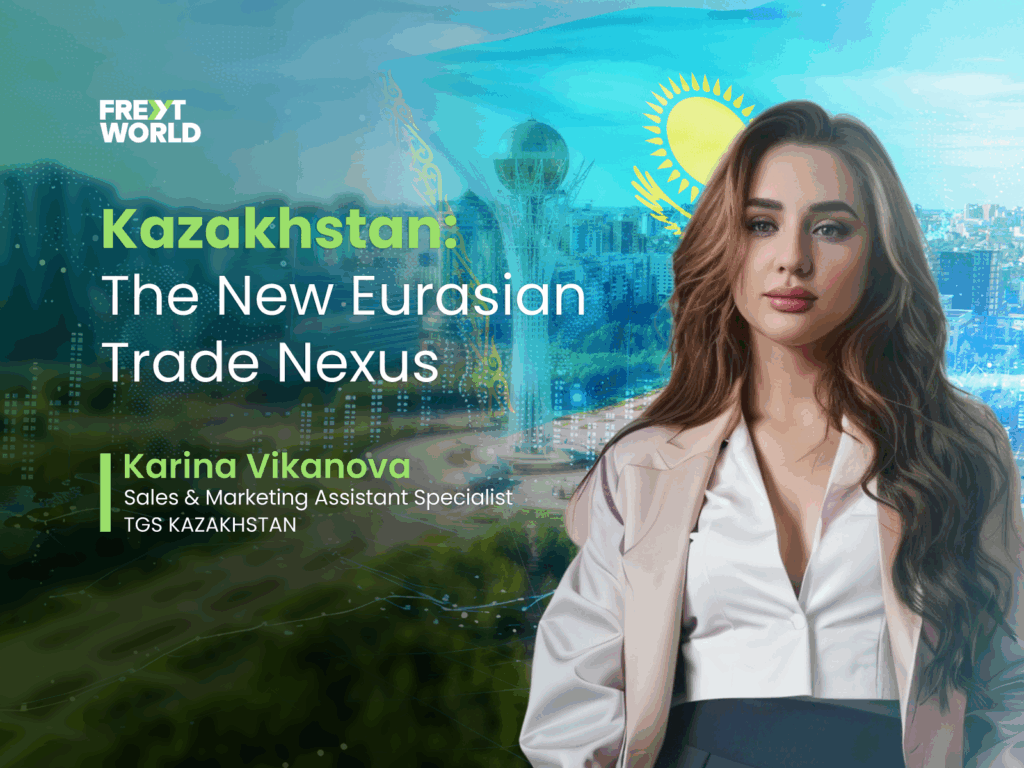 As global trade routes evolve, Kazakhstan is emerging as a critical Eurasian logistics nexus. Anchoring the rapidly growing Middle Corridor, the country connects China, Central Asia, and Europe through a strategic mix of rail and sea transport. With major infrastructure investments and rising demand for resilient supply chains, Karina Vikanova of TGS KAZAKHSTAN explains why Kazakhstan is fast becoming indispensable to modern East–West trade.
 - Top 3 Canadian Freight Forwarding Trends for 2026
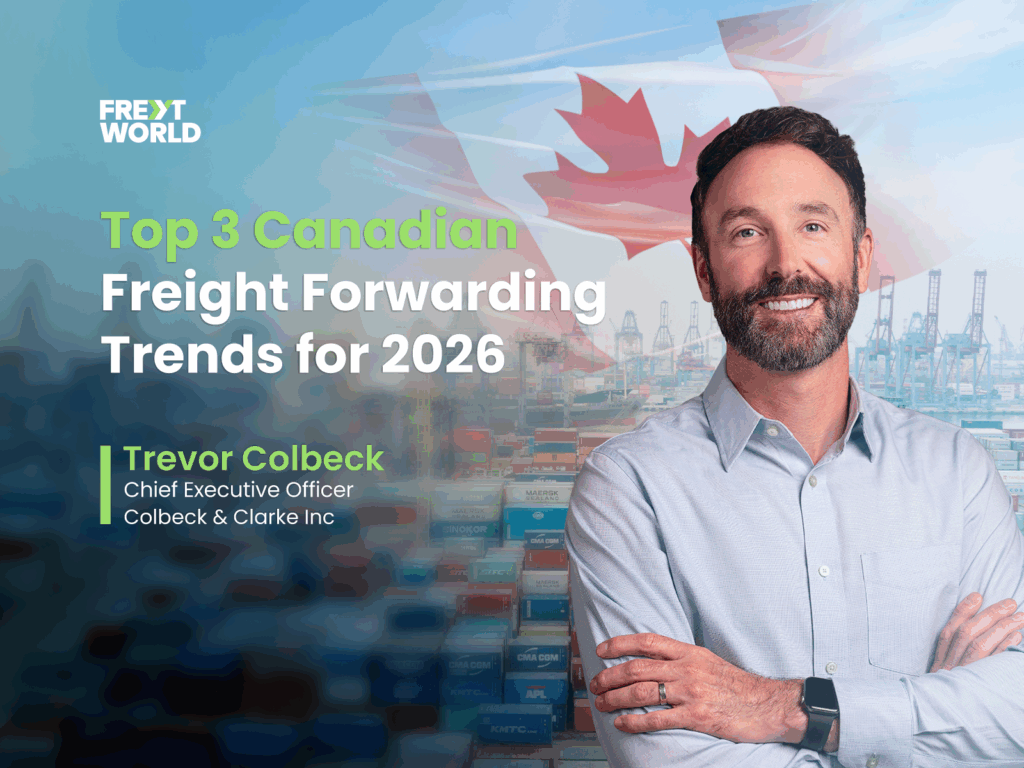 Canada’s freight forwarding sector is entering a defining era. As AI, sustainability, and shifting trade policies reshape supply chains, forwarders must evolve from operators into strategic advisors. With insights from Toronto expert Trevor Colbeck, we explore the top three trends that will shape logistics in 2026—and how businesses can prepare for a smarter, greener, and more resilient future.
 - Inside the Intricate World of Japanese Vehicle Export Logistics
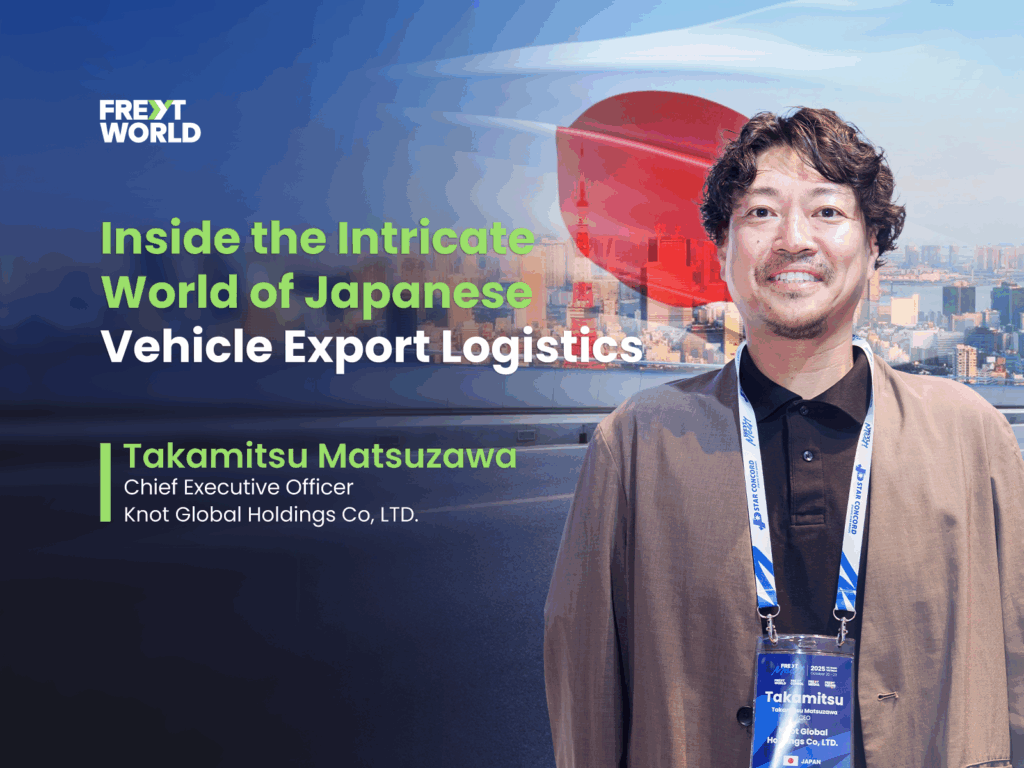 Behind every used Japanese vehicle shipped overseas lies a hidden world of inspections, paperwork, and specialized logistics. Explore how experts in Japan move cars from auction floors to global buyers with unmatched efficiency and reliability.